
Beyond the Noise: Why Musical Toys are a Sensory Powerhouse for Babies
We’ve all been there—the headache-inducing electronic toy that won't stop beeping. It is enough to make any parent want to skip the musical toy aisle altogether. However, before you declare your home a "silent zone," it is worth looking at the incredible developmental benefits of acoustic, wooden musical instruments.
Unlike battery-operated toys that play the same digital tune at the press of a button, wooden musical toys require the child to be the creator. This active participation is a critical part of auditory processing and sensory integration.
Developing Language through Auditory Processing
Auditory processing is the brain’s ability to recognise and interpret sounds. In the first few years of life, this skill is the foundation for learning to talk. When a baby strikes a xylophone or shakes a maraca, they are learning to distinguish between different pitches, volumes, and rhythms. This "ear training" helps them eventually pick out the specific sounds of human speech from the background noise of a busy room.
1. Wooden Xylophones and Melody
Our Wooden Xylophones are designed to be "parent-ear friendly." They produce a soft, melodic chime that encourages a child to experiment with different notes. Beyond the sound, using a mallet to hit a specific key is a fantastic way to sharpen hand-eye coordination and fine motor precision.
2. Rainmakers for Sensory Tracking
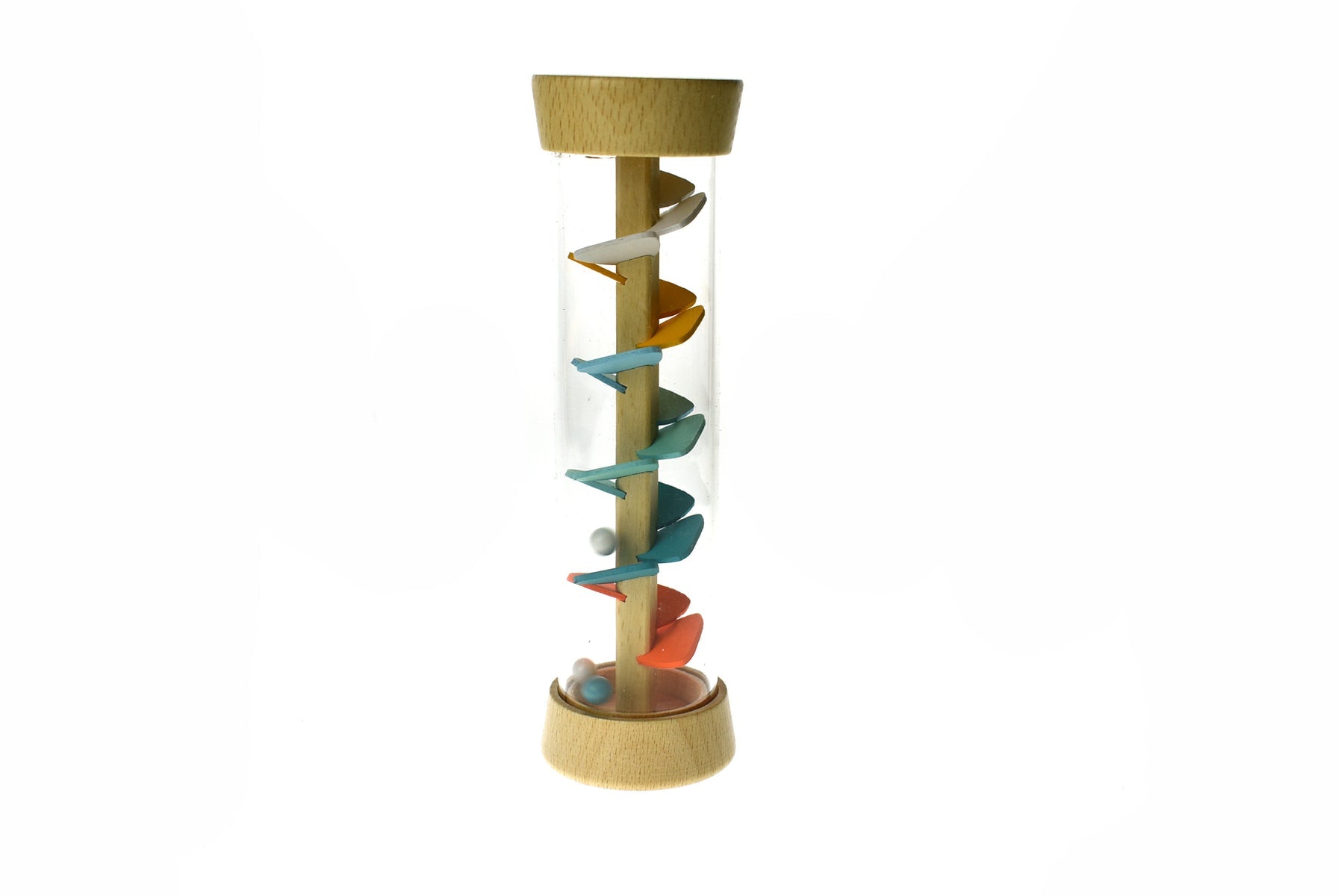
For a more calming sensory experience, the Rainmaker is a must-have. As the colorful beads cascade through the tube, they create a gentle sound that mimics a rainstorm. This toy is excellent for visual tracking (watching the beads fall) and auditory focus. It is a wonderful tool for "winding down" before naptime while still engaging the senses.
3. Maracas and Rhythmic Movement
Rhythm is one of the earliest concepts a child can master. Holding and shaking a pair of Maracas helps infants understand cause-and-effect (I move my hand, it makes a sound). It also builds grip strength and encourages "bilateral coordination" as they learn to shake both hands at the same time.
Bringing Music into the Daily Routine
You don’t need to be a musician to encourage a love for sound. Try "narrating" your child’s play—if they shake a rattle fast, say "fast!"; if they hit a drum slowly, say "slow." This connects physical movement to language, doubling the learning impact of every play session.

